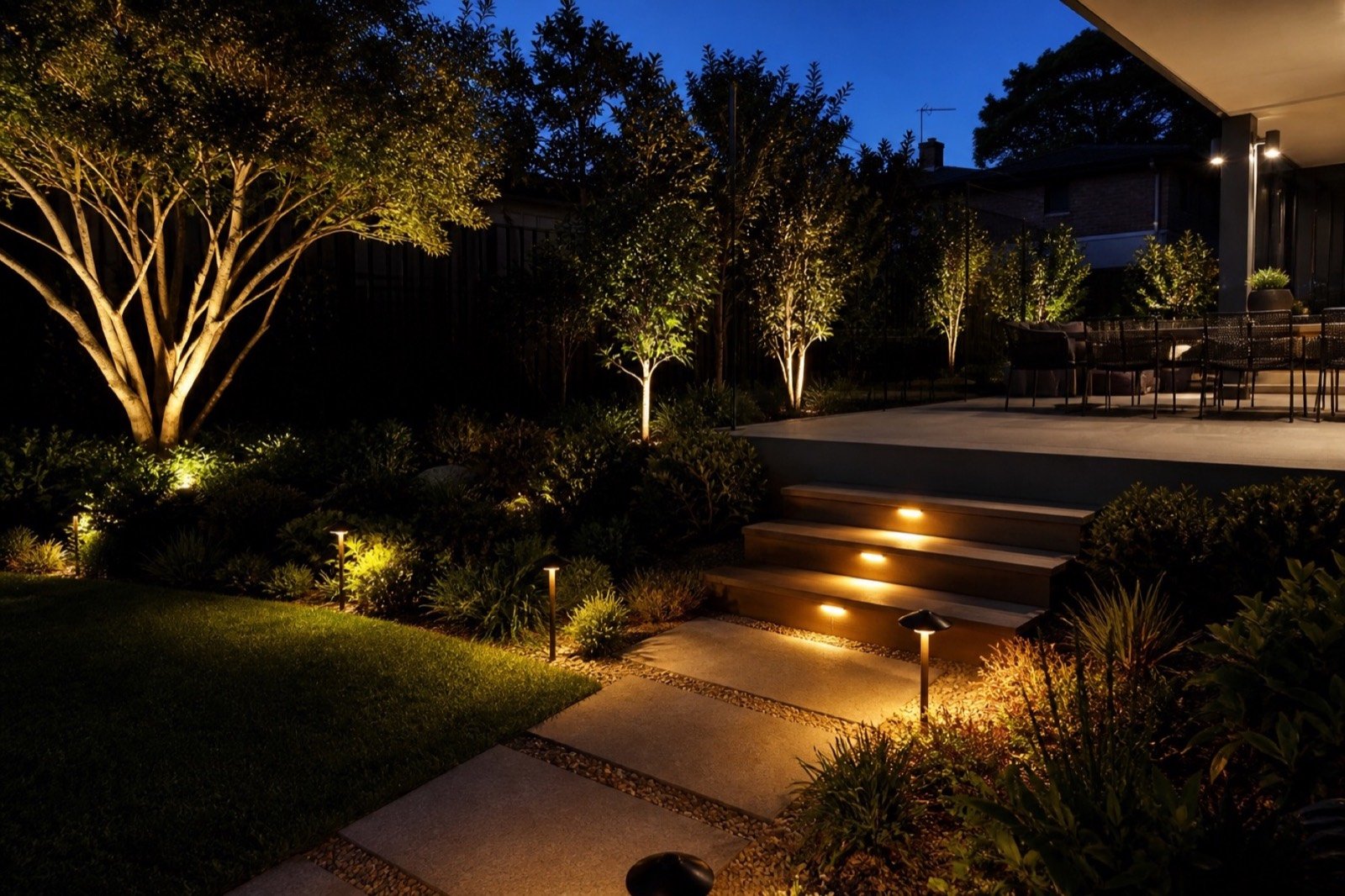
1. Light paths without creating glare
Low-level fittings can define steps and changes in direction. Aim light toward the walking surface rather than into visitors’ eyes, and avoid placing fittings where lawn equipment may damage them.
2. Highlight one or two feature trees
Uplighting a textured trunk or layered canopy creates depth. Not every plant needs a fitting—darkness between focal points is part of a professional lighting composition.
3. Add useful task lighting
Outdoor kitchens, barbecue areas and entries need clear functional light. Select fittings designed for exterior conditions and use a qualified electrician for permanent electrical work.
4. Wash walls and planting softly
A broad, gentle wash can make a courtyard feel larger and show planting silhouettes without harsh hotspots.
5. Use zones and timers
Separate practical and decorative lighting so only what is needed stays on. Timers and smart controls reduce energy use. Lighting works best when coordinated with paths, planting and our soft landscaping planning.